
Still confused about on-page and off-page SEO? Here’s a simple, no-jargon breakdown from Varun Digital Marketer to help you rank higher on Google.

Understanding the Difference Between On-Page and Off-Page SEO
Every business owner I sit down with asks me some version of the same question: “My website looks fine, so why isn’t it ranking on Google?” And almost every time, the answer comes down to one of two things — either their on-page SEO is weak, their off-page SEO is missing, or both.
These two terms get thrown around a lot in the digital marketing world, but very few people actually explain what they mean in plain English. So let’s fix that today.
Understanding SEO Definitions
Think of your website as a physical shop. On-page SEO covers everything inside the shop — from how the store is organised and what information is displayed to how easily visitors can find what they need. Off-page SEO, on the other hand, focuses on what happens outside the shop — such as reviews, recommendations, backlinks, and your overall reputation online.
Google looks at both factors when deciding where your website should appear in search results. A well-organised shop may have great products, but if no one recommends it or talks about it, attracting customers can be difficult. Likewise, a popular shop won’t retain customers if the experience inside is confusing or poorly organised. For better search visibility and long-term growth, your on-page and off-page SEO need to work together.
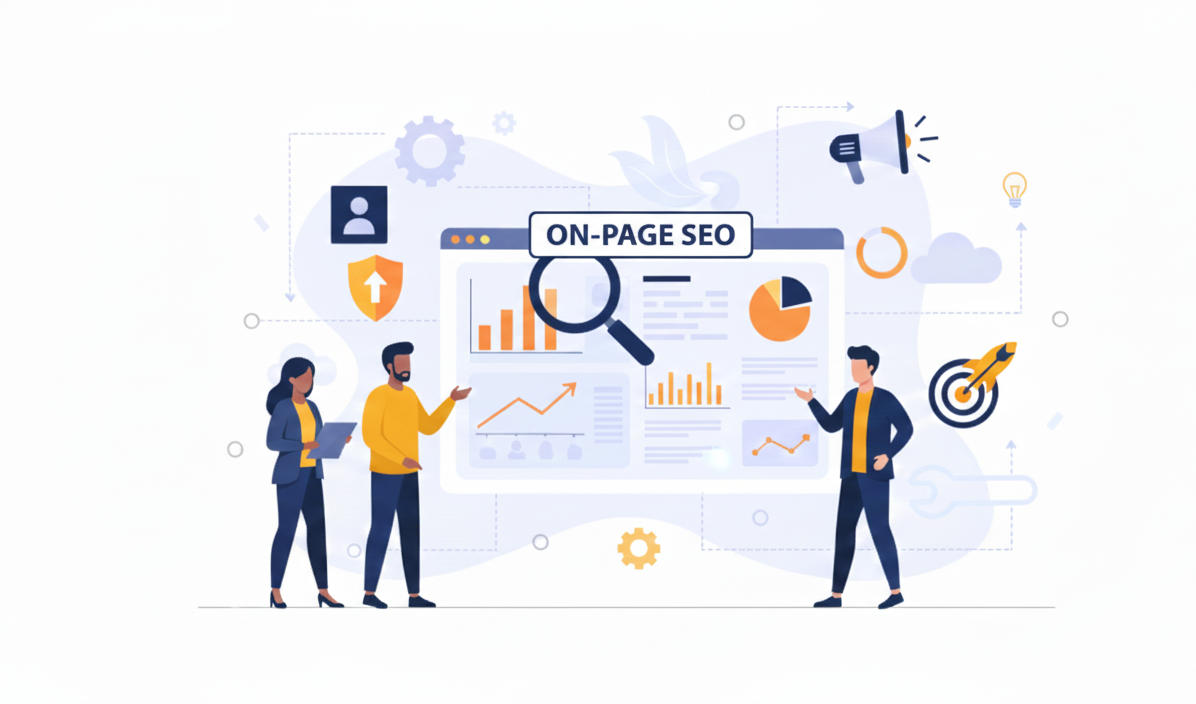
what is On-Page SEO and what are the key factors
On-page SEO is everything you can improve directly on your own website. From the content you publish to the way your pages are structured, you have control over these elements. You don’t need to rely on other websites or wait for anyone else to make changes — you can optimize them yourself to make your website more useful for both visitors and search engines.
Content That Actually Answers the Question
Google has become much better at understanding what people are actually looking for when they search. For example, someone searching for “best running shoes for flat feet” isn’t looking for a general article about running shoes they want useful information specifically related to flat feet. That’s why creating helpful, relevant, and easy-to-read content that directly answers the user’s question is one of the most important parts of effective on-page SEO.
Title Tags and Meta Descriptions
These are the headline and the short preview text that show up on the search results page. A compelling title tag with your keyword naturally placed can be the deciding factor between someone clicking your link or scrolling past it.
Heading Structure (H1, H2, H3)
A well-organized page makes it easier for both Google and your readers to understand your content. Start with one clear H1, then use relevant H2s and H3s to break the topic into easy-to-follow sections. This not only helps search engines understand what your page is about but also makes it easier for visitors to scan and find the information they need. After all, no one enjoys reading through a huge block of text.
Clean URLs
A URL like /on-page-seo-vs-off-page-seo tells both Google and the user exactly what the page is about. Compare that to something like /page?id=4471 — messy, forgettable, and unhelpful.
Internal Linking
Linking to related pages on your own site (like pointing from this article to your “Local SEO Guide”) keeps visitors browsing longer and helps Google understand how your content connects.
Image Optimization
Large, uncompressed images slow your site down, and slow sites lose rankings. Adding descriptive alt text also helps with accessibility and gives Google more context about your page.
Mobile Experience and Page Speed
With most people searching from their mobile phones, having a mobile-friendly website is more important than ever. Google primarily looks at the mobile version of your site when evaluating its performance. If your website takes too long to load, is difficult to navigate, or doesn’t display properly on smaller screens, it can hurt your search rankings as well as the overall user experience.
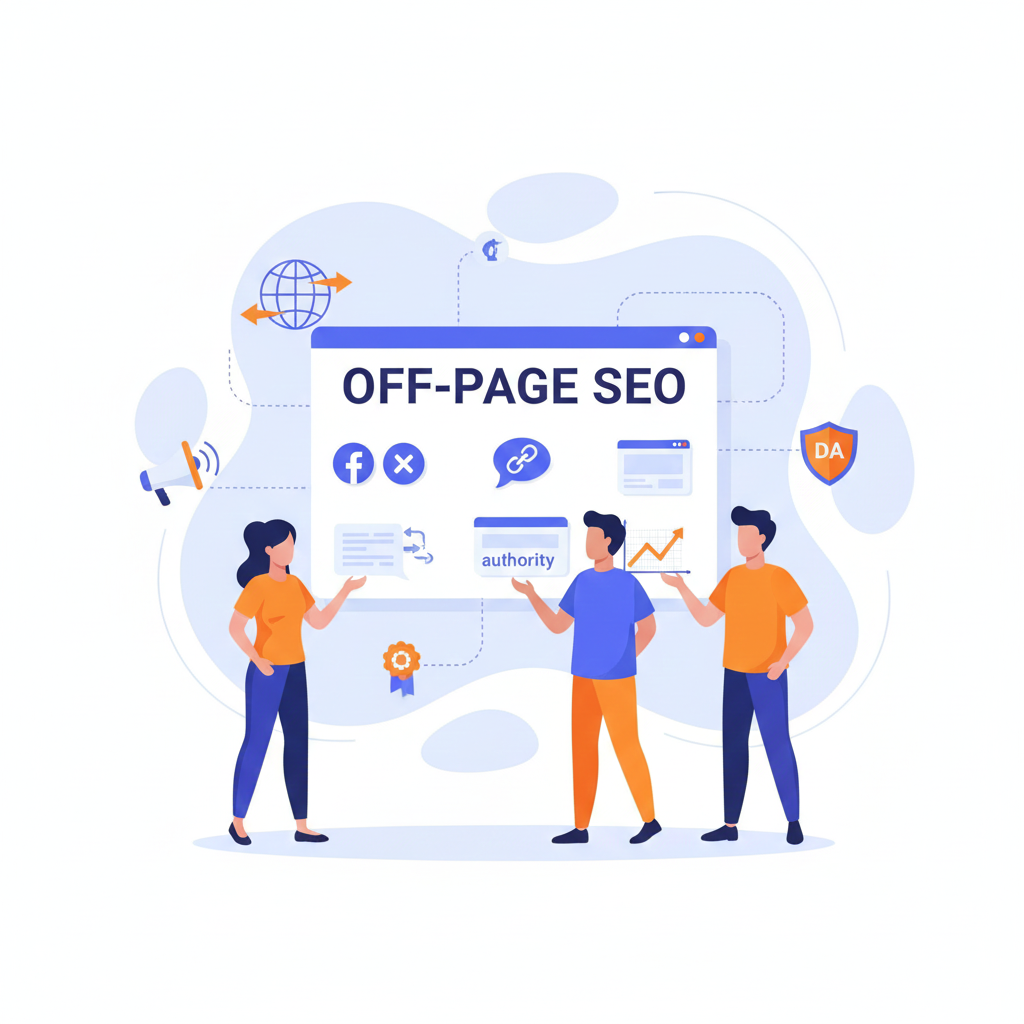
Off-Page SEO: What Builds Your Reputation
Off-page SEO focuses on everything that happens outside your website but still influences how search engines and people view your brand. It helps build your website’s credibility, authority, and reputation through things like backlinks, online mentions, reviews, and recommendations from other websites.
Backlinks
When another trustworthy website links to yours, it acts like a reference letter. The more relevant, high-authority websites that link back to you, the more Google trusts your site as a credible source.
Guest Blogging
Writing genuinely useful articles for other websites in your industry, with a natural link back to your own site, is one of the most respected ways to earn backlinks without gaming the system.
Social Signals
Social shares aren’t a direct ranking factor, but an active, engaged social presence drives traffic, increases brand recall, and often leads to more organic backlinks over time.
Reviews and Online Reputation
Genuine reviews on Google and industry platforms build trust — both with Google’s algorithm and with the actual humans deciding whether to choose you over a competitor.
Local Listings and Google Business Profile
For local businesses, this is often the single highest-impact off-page activity. Keeping your business name, address, and phone number consistent across Google Business Profile, Justdial, and other directories directly affects your local search visibility.
Brand Mentions
Even if another website mentions your brand without adding a link to your website, that mention can still help strengthen your online presence. When your brand is talked about across relevant and trustworthy websites, it can signal to search engines that your business is recognised and has authority in your industry.
Side-by-Side: The Core Difference
| On-Page SEO | Off-Page SEO | |
|---|---|---|
| Location | Inside your website | Outside your website |
| Control | Fully in your hands | Built through outreach and reputation |
| Focus | Content and structure | Trust and authority |
| Speed of results | Faster to implement | Builds gradually |
If you remember nothing else from this article, remember this: on-page SEO is what you say about yourself, off-page SEO is what the internet says about you. Google wants both to agree.
Which Should You Fix First?
Start with on-page SEO. Always.
Here’s the logic: if you start building backlinks and social buzz around a website that’s slow, poorly written, or badly structured, you’re essentially sending visitors to a shop that isn’t ready to open. All that outreach effort gets wasted the moment someone lands on your page and bounces straight off.
Once your website itself is solid — fast, well-organized, genuinely useful — off-page SEO becomes the multiplier. It’s what pushes you from the middle of page two to the top three results, where the vast majority of clicks actually happen.
Mistakes I See Businesses Make Repeatedly
Chasing backlinks before fixing the basics. I’ve seen companies spend serious money on link-building campaigns while their homepage still has a missing meta description. That budget is being spent in the wrong order.
Buying cheap, irrelevant backlinks. Not every backlink helps you. Spammy or unrelated links can actually trigger a Google penalty instead of boosting your rankings.
Treating SEO like a one-time project. Both on-page and off-page SEO need continuous attention. Search algorithms change, competitors improve their own sites, and consumer search behavior shifts. What worked a year ago isn’t guaranteed to work today.
Bringing It All Together
On-page and off-page SEO aren’t rival strategies competing for your budget — they’re two halves of the same machine. One builds a strong foundation, the other builds outside trust and authority. Neglect either one, and you’re capping how high you can realistically rank, no matter how much effort you put into the other.
At Varun Digital Marketer, this is the exact sequence we walk every client through before touching paid ads or outreach campaigns — get the on-page fundamentals right first, then layer in off-page authority strategically. It’s slower than shortcuts, but it’s the only approach that actually holds up over time.
If you’re unsure whether your website’s foundation is strong enough to support serious off-page growth, that’s worth a proper conversation before you spend another rupee on backlinks.